(An Autonomous Institution)
(Approved by AICTE, Affiliated to Anna University & Accredited by NAAC)
(Recognised by UGC under section 2(f) &12(B) of the UGC Act,1956.)
Accredited by the National Board of Accreditation - NBA (CSE, ECE, EEE)
Fostering high-end technical design, investigative competence, and breakthroughs in global networking frameworks.
The Master of Engineering in Communication Systems provides deep architectural insights into automated high-frequency modules, modern wireless signal processing techniques, and real-time validation methods. The department balances rigorous mathematical theoretical setups with experimental verification schemes.
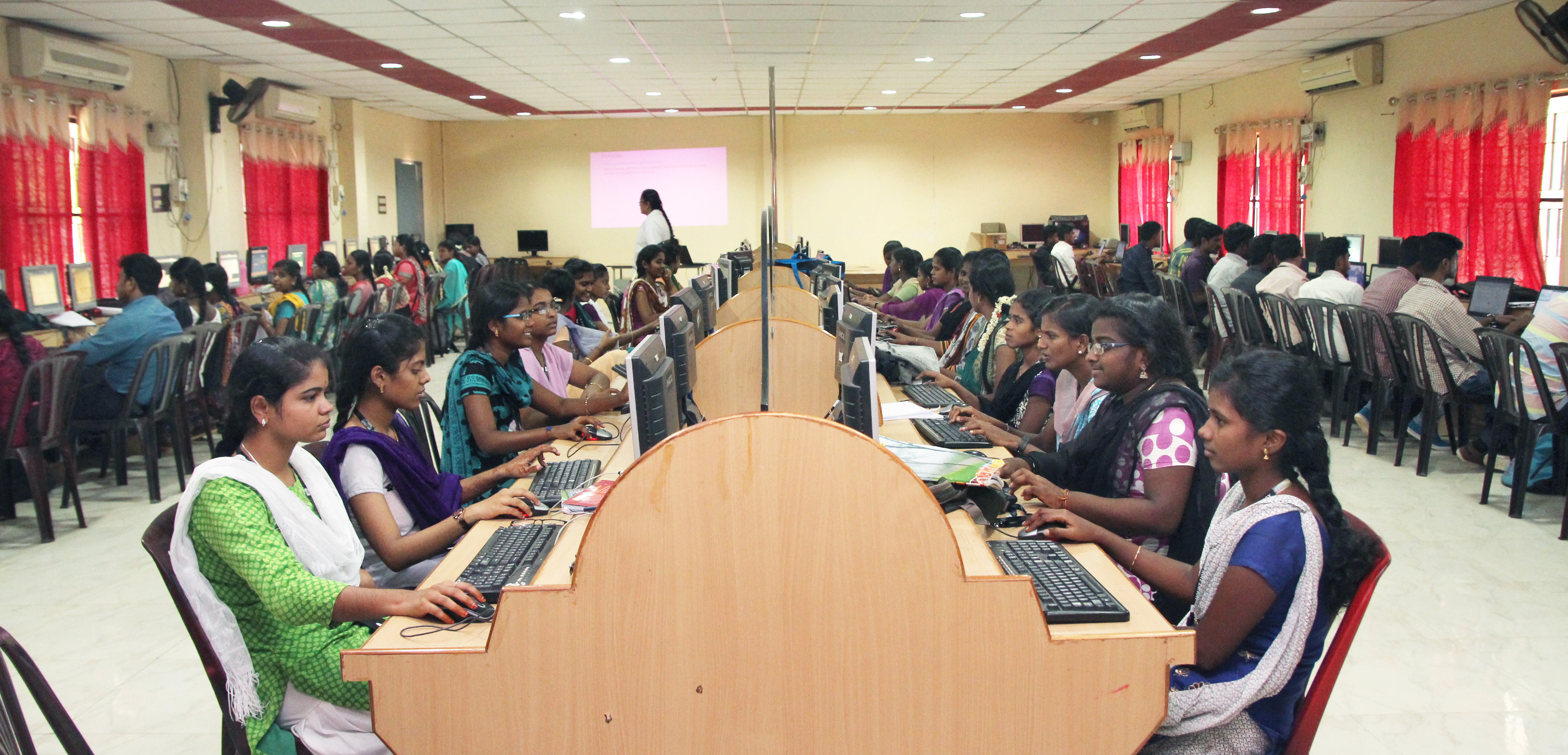
With immediate access to specialized simulation computing blocks, vector analyzers, and layout tools, postgraduates prepare comprehensively for premier positions within global research environments, space exploration units, or foundational doctoral studies.

To cultivate technical trailblazers in postgraduate electronics and communication domains by nurturing specialized research mindsets, engineering acumen, and robust values that promote sustainable development.
To deliver advanced instructional ecosystems with focus on hands-on optimization, algorithmic verification, and industrial testing capabilities. To promote high-impact peer-reviewed publications, industrial patents, and cross-border tech innovations.
Core achievements expected from our postgraduate engineers within a few years of graduation.
Resolve complex industrial networking limitations through profound architectural insights and standard analytical methodologies.
Continuously upgrade engineering knowledge profiles through standard professional credentials, scientific research ventures, or doctoral pathways.
Lead diverse infrastructure projects using strong management strategies, corporate compliance guidelines, and environmental awareness.
Domain-focused capabilities demonstrating specific competencies of our communication postgraduates.
Design, simulate, and optimize complex modern architectures including advanced antenna arrays, RF elements, and optical nodes using CAD tools.
Synthesize adaptive algorithms and communication workflows to alleviate network latency, secure transmissions, and boost data throughput.
Apply analytical logic to lead high-level engineering challenges, technical publications, or intellectual patent cycles.
The programmatic milestones achieved by students at graduation.
Apply mathematical and system definitions to address modern telecom infrastructure needs.
Diagnose structural network limitations using empirical testing and peer-validated literature frameworks.
Develop communication models satisfying operational targets under regulatory and safety bounds.
Formulate advanced scientific experiments and evaluate multifaceted datasets to extract logical results.
Select and leverage modern high-tier simulation tools to forecast system behavior parameters.
Evaluate sociological impact, professional risks, and safety laws when rolling out technical structures.
Assess full lifecycle footprints of engineering layouts to establish eco-friendly systems.
Uphold absolute structural codes of conduct, data privacy standards, and equitable responsibilities.
Operate effectively as an autonomous driver or trusted leadership element within multi-disciplinary groups.
Draft technical reports, present complex blueprints, and convey design logic unambiguously.
Incorporate smart fiscal planning structures to lead engineering projects within specific budgetary bounds.
Adapt to technology transformations through persistent, proactive professional development.
M.E., MBA., Ph.D., PG Dip. VLSI
M.E., Ph.D
M.E., Ph.D*